

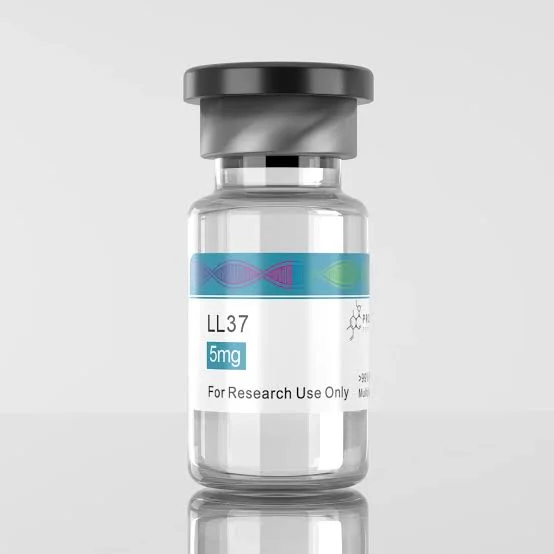
LL-37 Peptide
£49.00
LL-37 Peptide – Antimicrobial Peptide for Scientific Research
Explore the fascinating science of LL-37 peptide, a naturally occurring antimicrobial peptide that has attracted significant interest in molecular biology, immunology, and host-defense research. Known for its role in the body’s innate immune system, LL-37 is an important subject for researchers investigating antimicrobial mechanisms, cellular signaling, and the complex interactions between biological systems and their environments.
Whether your laboratory focuses on peptide biology, immune response pathways, or experimental microbiology, LL-37 offers an intriguing research target for investigating the properties and functions of naturally occurring host-defense peptides.
What Is LL-37 Peptide?
LL-37 is a 37-amino-acid peptide derived from the human cathelicidin antimicrobial protein, also known as CAMP or hCAP18. It is recognized for its involvement in innate immune defense and is studied for its interactions with microbial membranes, inflammatory signaling pathways, and cellular processes.
Its amphipathic structure, which features both hydrophobic and positively charged regions, is an important characteristic in research examining how antimicrobial peptides interact with biological membranes. Scientists also investigate LL-37 in relation to immune regulation, wound biology, and host-microbe interactions.
Key Features and Research Highlights
- Well-characterized peptide sequence: LL-37 is a defined 37-amino-acid peptide with an established identity in antimicrobial peptide research.
- Antimicrobial research relevance: A widely investigated subject in studies of host-defense mechanisms and microbial membrane interactions.
- Innate immunity research: Supports scientific investigations into the biological pathways associated with the human innate immune system.
- Cellular signaling interest: Studied for its interactions with inflammatory mediators and other cellular signaling processes.
- Broad scientific relevance: An established research subject across peptide chemistry, molecular biology, microbiology, and immunology.
Quality and Product Information Matter
When selecting LL-37 peptide for laboratory research, review the supplier’s documentation carefully. Important specifications include peptide identity, sequence confirmation, purity percentage, analytical testing, batch information, storage conditions, and available certificates of analysis.
These details help researchers assess whether a material meets the requirements of a particular experimental protocol. Appropriate handling, storage, and laboratory procedures should follow the supplier’s documentation and applicable institutional guidelines.
Choose LL-37 Peptide for Research-Focused Exploration
For laboratories investigating antimicrobial peptides and innate immune mechanisms, LL-37 represents a scientifically relevant molecule with a substantial research history. Its distinctive sequence and diverse areas of investigation make it a valuable subject for carefully designed laboratory studies.
Explore LL-37 peptide research opportunities with a focus on documentation, experimental rigor, and product transparency. Review the available technical specifications and analytical documentation before selecting a peptide for your laboratory’s research needs.
Research use only. LL-37 peptide is not presented as an approved medicine or as a product for human consumption, self-administration, or treatment of medical conditions. Research findings do not establish clinical safety or efficacy.
Be the first to review “LL-37 Peptide”
Related products
Peptides

Peptides
Peptides

Peptides

Peptides

Peptides

Peptides

Peptides
Reviews
There are no reviews yet.