
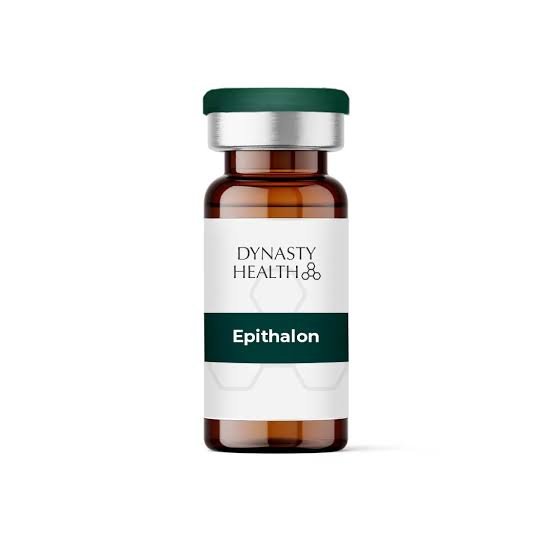
Epitalon Peptide
£65.00
Epitalon (Epithalon) is a synthetic tetrapeptide consisting of the amino-acid sequence Ala-Glu-Asp-Gly (AEDG). It has attracted scientific interest as a research peptide because of investigations into cellular processes involving telomerase activity, chromatin regulation, oxidative stress, and neuroendocrine pathways.
Research published in scientific literature has examined Epitalon in cell-based and experimental models. For example, laboratory research has reported effects on telomerase activity and telomere length in cultured human cells, while other studies have investigated its influence on chromatin and gene activity. These findings are useful for understanding potential biological mechanisms but should not be interpreted as evidence that Epitalon produces the same effects in humans.
The peptide is therefore of interest to researchers studying tetrapeptide biology, cellular aging mechanisms, telomere biology, gene regulation, and experimental peptide research. A 2025 review describes Epitalon as a compound that has been investigated through in-vitro, in-vivo, and computational approaches, while noting that its mechanisms remain incompletely understood.
Importantly, Epitalon should not be presented as an approved anti-aging treatment, longevity therapy, sleep medication, or disease treatment. The FDA’s 2026 assessment found insufficient human safety information for Epitalon, including concerns relating to potential immunogenicity and peptide-related impurities for proposed injectable use.
Be the first to review “Epitalon Peptide”
Related products
Peptides
Peptides
Peptides

Peptides

Peptides
Peptides
Peptides

Peptides
Reviews
There are no reviews yet.