Uncategorized
Semax and Selank Peptides: What Are They and How Do They Differ?
Aug
Semax and Selank are synthetic peptides that have attracted growing interest in online discussions about nootropics, cognitive research and peptide science. Often searched together as “Semax and Selank”, these compounds are frequently discussed in connection with research into cognition, stress responses and neurological pathways.
However, it is important to distinguish scientific research from established medical use. Neither peptide should be presented as a proven treatment for a medical condition, and availability, regulation and approved uses can vary between countries.
What Is Semax?
Semax is a synthetic peptide analogue developed from a naturally occurring peptide sequence. It has been investigated primarily in Russia and other research settings, with studies exploring potential effects involving neurological and cognitive processes.
Research discussions surrounding Semax commonly focus on areas such as neuroprotection, learning, memory and brain signalling. These findings are interesting from a scientific perspective, but research results should not automatically be interpreted as proof that Semax is effective or appropriate for general consumer use.
What Is Selank?
Selank is another synthetic peptide that has been investigated for its potential influence on neurological and immune-related processes. Scientific interest has particularly centred on mechanisms associated with anxiety-related behaviour, stress responses and neurotransmitter activity.
Like Semax, Selank remains an area of ongoing research rather than an established mainstream medicine in many countries. Claims made online can sometimes go beyond what the available evidence actually demonstrates.
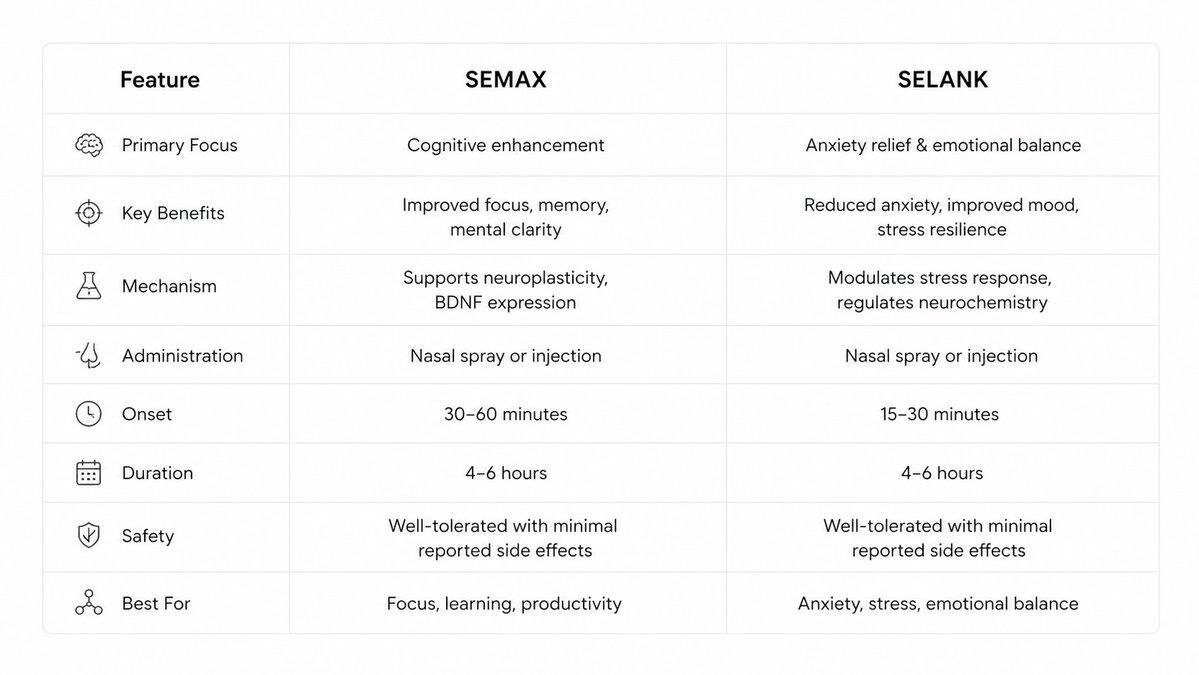
Semax vs Selank: Key Differences
Although both compounds are commonly discussed within the research peptide and nootropic communities, they are not identical.
Semax is generally associated with research into cognitive and neuroprotective mechanisms, while Selank has received attention for research involving stress, anxiety-related responses and neurological signalling.
The two peptides therefore have different research profiles, despite frequently appearing together in searches for Semax and Selank peptides.
What Does the Research Say?
Scientific evidence surrounding these compounds remains limited compared with medicines that have undergone extensive clinical development. Some studies have reported potentially interesting biological effects, but research quality, study size and availability of large-scale clinical evidence are important considerations.
Consumers should be particularly cautious about websites making guaranteed claims about improved memory, anxiety relief, focus, productivity or other health outcomes.
Are Semax and Selank Legal?
The legal and regulatory status of Semax and Selank depends on the country and intended use. A peptide being available online does not necessarily mean it is approved as a medicine or authorised for human consumption.
Before purchasing or using any research peptide, check the regulations that apply in your location and consider discussing questions about safety or medical suitability with a qualified healthcare professional.
Final Thoughts
Interest in Semax and Selank peptides continues to grow as research into synthetic peptides and neurological pathways develops. Their scientific profiles are intriguing, but online claims should be approached critically.
For anyone researching Semax, Selank, research peptides or nootropics, prioritise reputable scientific information, transparent product documentation and current regulatory guidance rather than relying solely on marketing claims. This article is for general educational purposes and is not medical advice.
